My Honest Review of the OrganiCup (AllMatters)
In the early years, it felt comfortable and easy enough to maintain. However, over time, the practical side of using a cup has become more noticeable. It needs to be sterilised before each cycle, and using it while travelling or when out for long periods can feel inconvenient, especially when it comes to emptying and cleaning.
I also never found it to be completely leak-proof on heavier days, so I often pair it with reusable pads anyway. Because of all this, I now use reusable pads 100% of the time. They are simply more convenient for my lifestyle and feel more comfortable overall.
My experience might be different from yours. If you are keen to give it a try, read the full review below.



Benefits of Using Menstrual Cup
Using a reusable period product is more sustainable than disposable pads. It reduces waste greatly and is more economical in the long term. If you’re looking for more ways to live a sustainable life, check out our detailed post here.
Before using a menstrual cup, I was sceptical of whether or not using it was worth it. The thought of inserting an object was intimidating. After researching the benefits it brings, I decided it is the best thing to do.
In this section, I list the several benefits of using menstrual cups.
Reduce Waste
Did you know that in the UK alone, approximately 3 billion disposable menstrual products are used annually, contributing to around 200,000 tonnes of waste each year? These products are often made with significant amounts of plastic, with a single pack of menstrual pads containing as much plastic as five plastic bags. This plastic waste not only ends up in landfills but also contributes to pollution in our rivers and oceans, making menstrual products one of the most common plastic items found on European beaches. (1).
The constant waste builds up to an average of 11,000 disposable menstrual products throughout 40 years of menstruation (2).
On the other hand, a single silicone cup is long lasting and can last for 10 years, it really is the best invention to reducing waste. By using OrganiCup instead of single-use menstrual products, you can help lessen the amount of waste tremendously.
Cost-saving
Why Choose OrganiCup?
High-quality Material
OrganiCup is made of 100% medical-grade silicone. It is soft and bends easily, which makes the whole process of folding and inserting it way easier.
The OrganiCup is also 100% free from bleach, glue, chlorine and perfume, which may irritate your skin. This makes it safe and worry-free to wear them.
They are free from allergen as certified by the Allergy Certified, and registered with The Vegan Society.
Satisfaction Guarantee
The Satisfaction Guarantee in OrganiCup allows you to change the size of the cup and period underwear for free or get a refund if you find it unusable.
You could do so for up to 90 days after purchasing the cup and 60 days for the underwear. How great is that?
Determining the right cup size for you you might not be straightforward. It might need some experiments to determine which size is the best, or if it works for you at all.
Sustainable Packaging
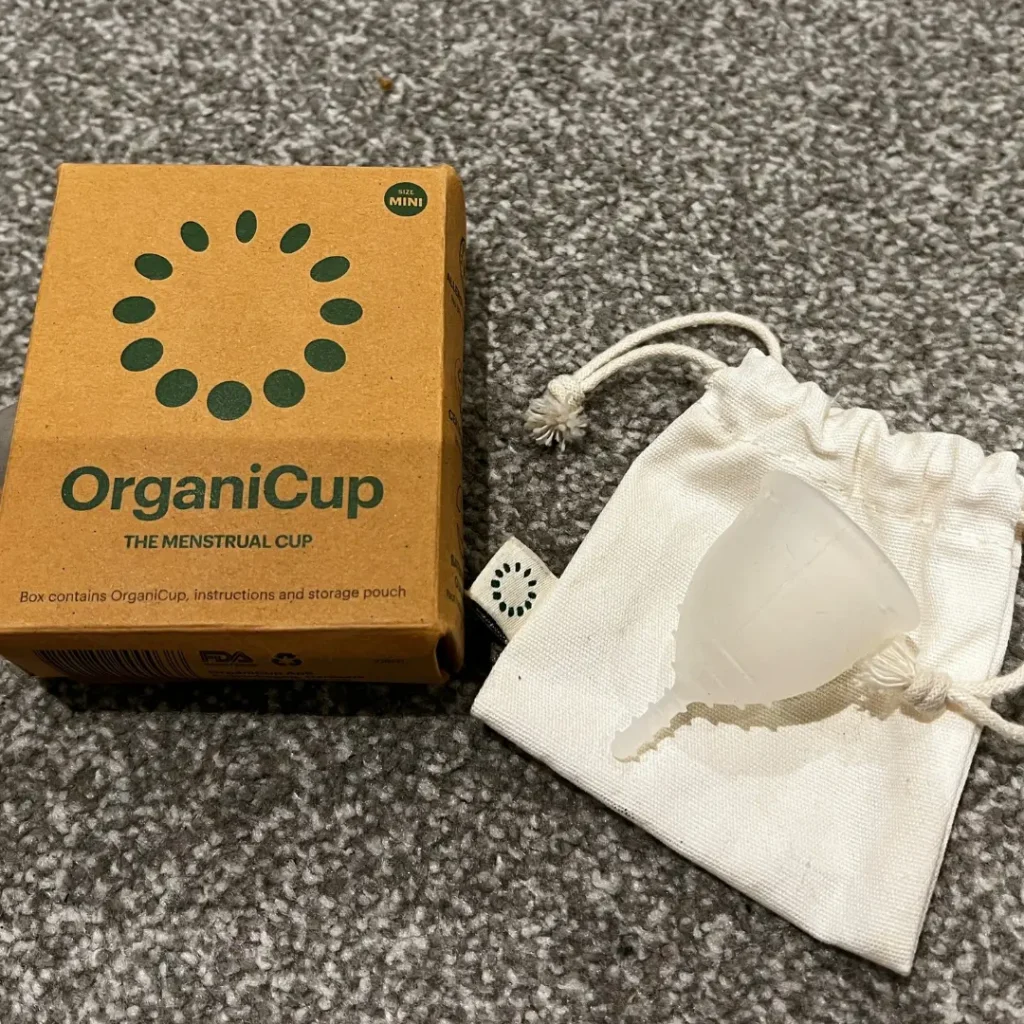
When you purchase products from OrganiCup, they come in fully recyclable packaging and zero plastics.
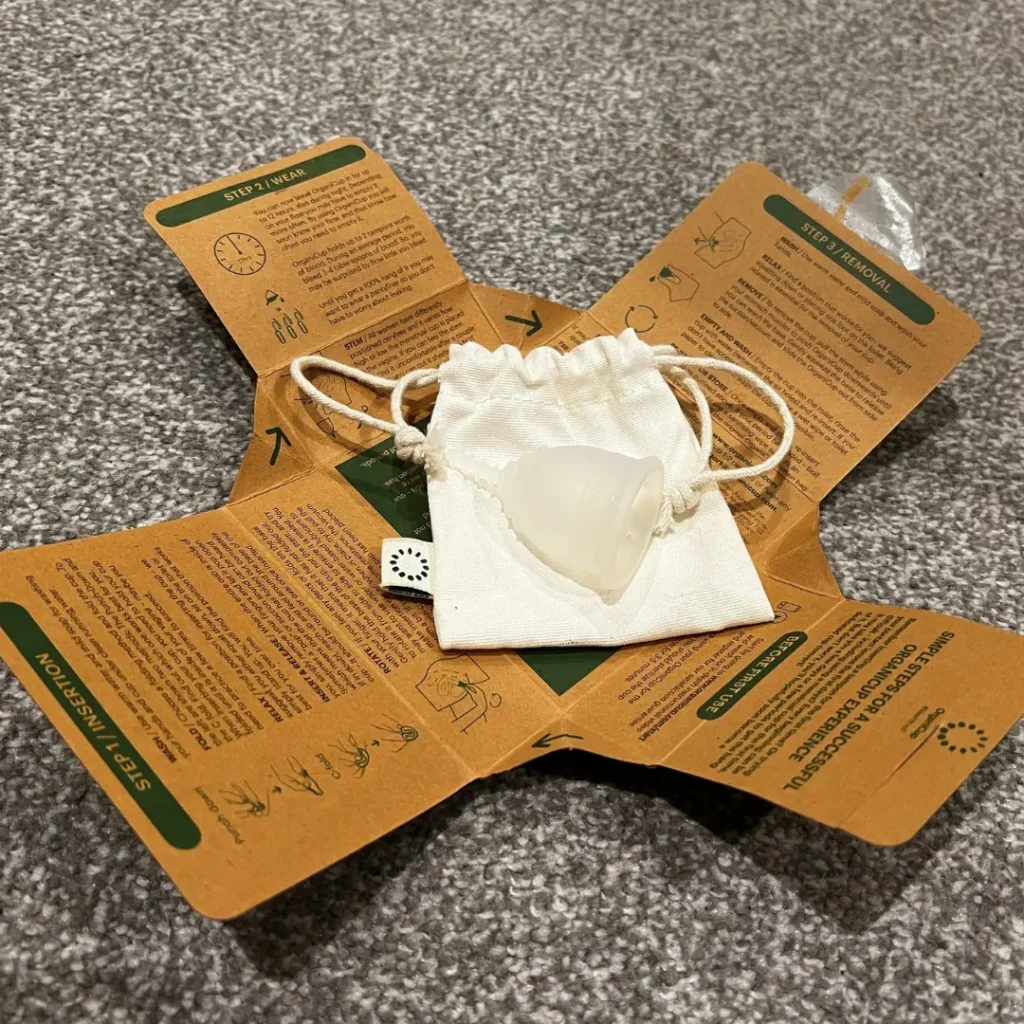
The box for the cup is made from cardboard and the instructions are printed directly on it, so there is no unnecessary use of paper.
It also comes with a cute small, organic cotton, eco-friendly pouch for you to store the cup in.
Period Poverty
OrganiCup is actively fighting against period poverty, especially in poorer countries, and has formed partnerships with NGOs worldwide to educate women about menstrual health and provide them with menstrual products.
To date, they have donated about 30,000 menstrual cups worldwide. It always feels rewarding to support companies that benefit the society.
Good Selection of Cup Size
OrganiCup has a good selection of menstrual cups size that caters to many people. For exact dimensions, see their size recommendation. You will likely find something that suits you.
Remember that the recommended size is only sometimes true, as no size fits all. That is why OrganiCup has a Satisfaction Guarantee so you can find the right cup.
I personally bought the size A cup but later purchased the mini size because I needed a smaller size. See the table below for exact measurements of Size A and Mini that I took. I have also included a picture of both sizes side by side.
| Size Mini | Size A | |
| Total Cup Length (cm) | 5.5 | 7.0 |
| Cup Diameter (cm) | 3.5 | 4.0 |
How to Use OrganiCup
Insertion
At first, I found inserting the cup to be the most challenging part. On my first period cycle, I spent about 5 minutes inserting it and ensuring it was properly sealed.
But after a few times, it became easier as I am used to it. It also helps tremendously to put some lubricants around the rim the first few times.
You can try different ways to fold a cup, but I prefer the punch-down fold the most as when you pinch it, it forms a smaller tip and gets wider at the bottom. I have also recommended other types of cup folds for beginners, such as the c fold and diamond fold. Watch the video above as you might find it useful.
When inserting the cup, ensure that you are in a comfortable position. That can either be putting one leg on the toilet, sitting on the toilet, or squatting down. It is up to you! Most importantly, you have to be relaxed when inserting it.
When the entire cup is inside, feel the base and rotate it a couple of times to ensure the cup is open and sealed. When it is in the place, try to pull it gently, and if you can feel a slight resistance, it means that your cup is sealed.
When it is in the right place and inserted correctly, you don’t feel a thing, it is super comfortable and sometimes I even forget that the cup is in.
Removal
You can wear the cup for 12 hours straight before emptying it. Before removing the cup, you need to be in a comfortable position. I prefer sitting on the toilet as I can empty it immediately. Ensure that you feel relaxed when removing it.
Then, all you need to do is feel the stem and pull it out while using your stomach muscle to push it.
After that, empty it and clean it with a mild soap so it can be inserted again. If you are in a public bathrooms, wipe it with toilet paper and you can rinse it in the sink.
Storing
After you are done with your period, wash your cup with mild soap. Then, put it in boiling water and simmer for a few minutes. Alternatively, you can use their sanitizing wipe, OrganiWipe, and store it in the OrganiCup organic cotton bag.
My Final Thoughts of Using OrganiCup
Tips and Tricks of Using Menstrual Cups
Pros and Cons
Pros
- Made from soft silicon – Makes the cup easier to bend.
- Satisfaction Guarantee – You can request for a change of size or a full refund for up to 90 days after purchase.
- Sustainable packaging – All packaging is made from recycled cardboard. Zero plastic is used in the packaging.
- Good size selection – There are three sizes to choose from, so I am sure you will find something that will work for you!
Cons
- Inconvenient Routine – The main drawback for me is the effort involved. It needs to be sterilised each cycle, and emptying or cleaning it when out or travelling can be awkward. Over time, this made it feel less practical for everyday use.
- Turns yellow after a while – When you have been using OrganiCup after a while, you will notice that it will stain and turn yellow. However, it is perfectly normal for medical grade silicone to get discoloration after being in contact with the iron in blood.
- Not 100% leakproof on heavy days – It works well for most days, but it has never been completely leak proof for me, especially during heavier flow. I pair it with sanitary pads during heavier days.
Other Products From OrganiCup You Might Like
Wrapping Up
Using a menstrual cup can feel intimidating or messy at first. While it can become more manageable with practice, it does require a level of effort and routine that may not suit everyone long term.
It can still help reduce waste and save money over time, which makes it an appealing sustainable option.
However, after four years, I personally find reusable pads more convenient and comfortable for everyday use.
The AllMatters(formerly OrganiCup) is still a high-quality menstrual cup, but whether it works for you will depend on your lifestyle and preferences.
OrganiCup FAQ
Can teenagers use a menstrual cup?
If you’re wondering whether or not you are old enough to use a menstrual cup, here is the answer. There is no age limit to using a menstrual cup. You can use it as soon as your cycle starts.
In fact, the smallest cup in the OrganiCup range is the Mini cup, which is suitable for teenagers.
How long do I need to boil a menstrual cup in water?
Sterilizing your cup after every cycle is essential. It is recommended by OrganiCup to put it in boiling water for 3-5 mins. Avoid boiling it for more than 10 minutes.
Keep an eye on the cup when boiling it, and turn it a few times, as it usually floats in water, so that all parts of the cup are thoroughly sterilized.
Can you swim with a menstrual cup?
Period products worn internally, such as tampons and menstrual cups, are perfectly suitable for swimming, bathing, sauna, and scuba diving.
Does a menstrual cup hurt?
Having tried it myself, I can assure you that when it is worn correctly, you will not notice that it is even inside you at all.
If you are concerned about the insertion, putting lubricant around the rim helps get the cup in. It is also worth trying different folds that you are most comfortable with. See my YouTube video for the Top 3 folds I recommend for beginners.
Why Did OrganiCup Change its Name?
OrganiCup changed its name to AllMatters in 2021 when they extended their products range to offer new products. Apart from menstrual cup, they also offer other zero waste period products.