Long-Term Product Review

Bambaw Reusable Sanitary Pads Review

Farah & FinnPersonally owned · No PR samples
Experience Log Owned 4 years · Used Monthly
Bambaw sanitary pad
Editorial Verdict

Four years on, they have paid for themselves and still perform.

Updated Nov 2025 5/ 5
Recommendation
Buy
Best for
Anyone making the switch from disposable pads
Skip if
You would rather not hand-wash and air-dry
Buy via

After four years using the Bambaw reusable pads they have held up to repeated washing and stayed comfortable and absorbent. The trade-off is the washing routine and a thicker feel than disposables, which suited us once we adjusted.

What works

  • Reusable
  • Comfortable to use
  • Cost effective
  • Excellent absorption

Watch out for

  • Requires washing
  • Thicker than disposable pads
  • Costly initial investment

Four years into using the Bambaw reusable sanitary pads as our main period product, we are still on the same set, and in our own side-by-side test the medium pad held nearly twice the liquid of a disposable pad the same size. The snap-on wings keep them in place, the extra thickness took a cycle or two to get used to, and the washing routine is the one honest trade-off.

Here is the honest verdict: how the absorbency actually compares, what it is like living with the snap-wing fit day to day, the washing routine that keeps them going, the real cost saving, and who should stick with disposables instead.

The verdict in full

The Bambaw Reusable Sanitary Pads earn a 5 out of 5 from us. Four years on, they have paid for themselves and still perform. This is a straightforward buy for anyone making the switch from disposable pads, and it is a genuinely good place to start if you want washable period protection that does not compromise on absorbency. Skip it if you would rather not hand-wash and air-dry as part of your monthly routine.

After four years, the pads have held up to repeated washing and stayed comfortable and absorbent. The trade-off is the washing routine and a thicker feel than disposables, which suited us once we adjusted. Disposable pads are designed to be used once and thrown away every cycle for decades; a reusable set sidesteps that by design, since the fabric that gets worn is also the part you wash and bring back rather than bin.

How we tested it

How we tested this
Tested by Our reviewer
Owned for 4 years
Conditions Regular monthly use, fully replacing disposable pads
Measured Absorbency against a disposable pad, comfort and fit, staining, and how the fabric holds up after years of washing
4 yrs
Of regular use
70 ml
Absorbed by the medium pad, versus 45ml for a disposable the same size
3
Pad sizes, from light to heavy flow
0
Disposable pads bought since switching

Living with the Bambaw pads

Absorbency in real use

We ran our own side-by-side test: the medium Bambaw reusable pad absorbed 70ml of water, compared with 45ml for a disposable pad of the same size. In practice, that translated into real confidence on a heavier day, and after four years the absorbency has not visibly dropped off.

The Bambaw medium reusable sanitary pad shown during an absorbency comparison test against a disposable pad
In our own test, the medium pad absorbed 70ml of water against 45ml for a disposable pad of the same size.

Sizing: three flows in one set

The set comes in three sizes: light, medium and heavy flow, each built the same way but sized for how much you need to absorb that day. Being able to switch pad size through a cycle, rather than being stuck with one generic disposable shape, is one of the small conveniences that took a while to appreciate.

A Bambaw reusable sanitary pad laid flat to show its size and shape
One of the three sizes in the mixed pack, made to the same three-layer design as the rest of the set.
SizeBest forFits in the travel pouch
LightSpotting and lighter daysYes
MediumRegular flow daysYes
HeavyHeavy flow and overnightNo

The snap-wing fit against skin

Snap-on wings hold the pad in place through the day, the same job a disposable’s adhesive strip does, without the sticky residue. The pad itself is noticeably thicker than a disposable, which took a cycle or two to get used to, but the soft microfiber top layer has been far gentler on the skin than any disposable we tried before, with none of the chafing or irritation that pushed us off certain disposable brands.

The Bambaw reusable sanitary pad showing the fabric top layer and snap-on wings
The snap-on wings hold the pad in place, and the soft top layer has meant noticeably less irritation than disposables.

The washing routine

This is the one genuine trade-off. It is more effort than binning a disposable, and it means planning ahead so a clean pad is always ready. The upside is that after four years of this routine, ours still look close to new, and the dark fabric hides staining well.

1
Rinse in cold water

As soon as you can after use, rinse the pad in cold water. This stops staining from setting before it reaches the wash.

2
Wash on a cold cycle

Hand wash or add it to a cold machine wash. We avoid hot water and fabric softener, since both can wear the waterproof PUL layer faster.

3
Air dry

Skip the tumble dryer and let the pad air dry fully before it goes back into rotation. It is the step that has kept the PUL layer intact for years, not just months.

What to know before you buy

Honest note

The extra thickness and the washing routine are real adjustments, not small print. If you want something you use once and bin without a second thought, a reusable pad is not that product; budget a cycle or two to get used to both before deciding it is not for you.

Materials and sustainability

Each pad is built from three layers: a bamboo charcoal layer for odour control, a microfiber layer for absorption, and a waterproof PUL (polyurethane laminate) layer to stop leaks through to clothing. Bamboo charcoal and microfiber are also part of why the fabric has kept its shape and colour through four years of regular washing. Disposable pads, by comparison, are often bleached with chlorine, a process linked to dioxin formation, and dioxins have been associated with hormone disruption and cancer risk in some studies. Disposables can also carry artificial fragrances and adhesives that irritate sensitive skin. A washable pad made from bamboo charcoal, microfiber and PUL sidesteps all of that, since nothing is being bleached or glued against the skin in the first place.

The bamboo charcoal, microfiber and waterproof PUL layers that make up a Bambaw reusable sanitary pad
Three layers, bamboo charcoal, microfiber and a waterproof PUL lining, and nothing bleached or glued against the skin.

How it compares

A reusable pad is not the lowest-effort option in the drawer. If you want to use something once and bin it without a second thought, a disposable will always be less hassle. If you want the lowest ongoing cost and the least waste, a reusable pad wins clearly, and period underwear sits somewhere in between. Here is how the three compare on what actually matters.

Materials Ongoing waste Chemical exposure risk Price band
Our pick Bambaw Reusable Pads
Materials Bamboo charcoal, microfiber, waterproof PUL
Ongoing waste None once washed, packaging is minimal
Chemical exposure risk Lower, no bleach or synthetic absorbents against skin
Price band ££
Disposable pads
Materials Wood pulp and plastics, often chlorine-bleached
Ongoing waste High, a new pad binned every cycle for years
Chemical exposure risk Higher, some bleaching, fragrance and adhesives linked to irritation
Price band £, cheap per pack, adds up over years
Period underwear
Materials Absorbent fabric layers built into the underwear itself
Ongoing waste None once washed, similar to a reusable pad
Chemical exposure risk Lower, similar reusable-fabric profile to pads
Price band £££, higher cost per garment, fewer pieces needed

Price band: £ = budget, ££ = mid, £££ = premium. Ratings are from our own four years of regular use of the Bambaw pads and widely reported experience for the comparison options.

The pros and cons in depth

+

What we liked

  • Reusable. One set has replaced years of disposable pads, and after four years of regular washing it shows no meaningful wear.
  • Comfortable to use. The snap-on wings keep it securely in place, and the soft microfiber layer against the skin has caused far less chafing and irritation than the disposable pads we used before.
  • Cost effective. It is a one-time purchase rather than a recurring monthly cost, so the set pays for itself over time compared with buying disposable pads every cycle.
  • Excellent absorption. In our own side-by-side test, the medium pad absorbed 70ml of water compared with 45ml for a disposable pad of the same size, comfortably outperforming it.

What we didn’t

  • Requires washing. Unlike a disposable you can bin and forget, every pad needs rinsing and a wash cycle before it goes back into rotation, which is extra effort some months.
  • Thicker than disposable pads. The extra absorbent layers make it noticeably bulkier than a slim disposable, and that takes some getting used to.
  • Costly initial investment. A full mixed-flow set costs more upfront than a single pack of disposables, even though it works out cheaper over years of use.

A closer look

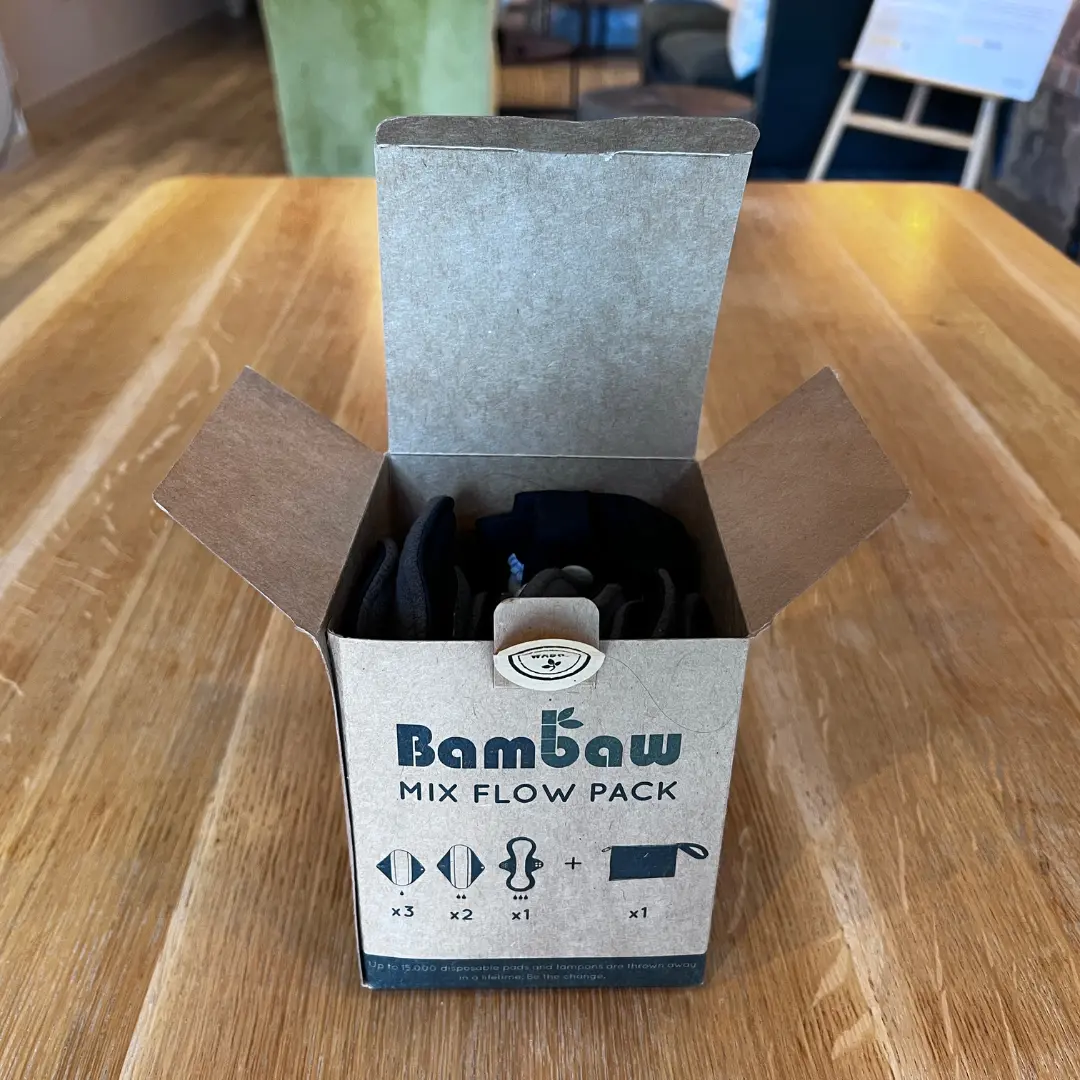
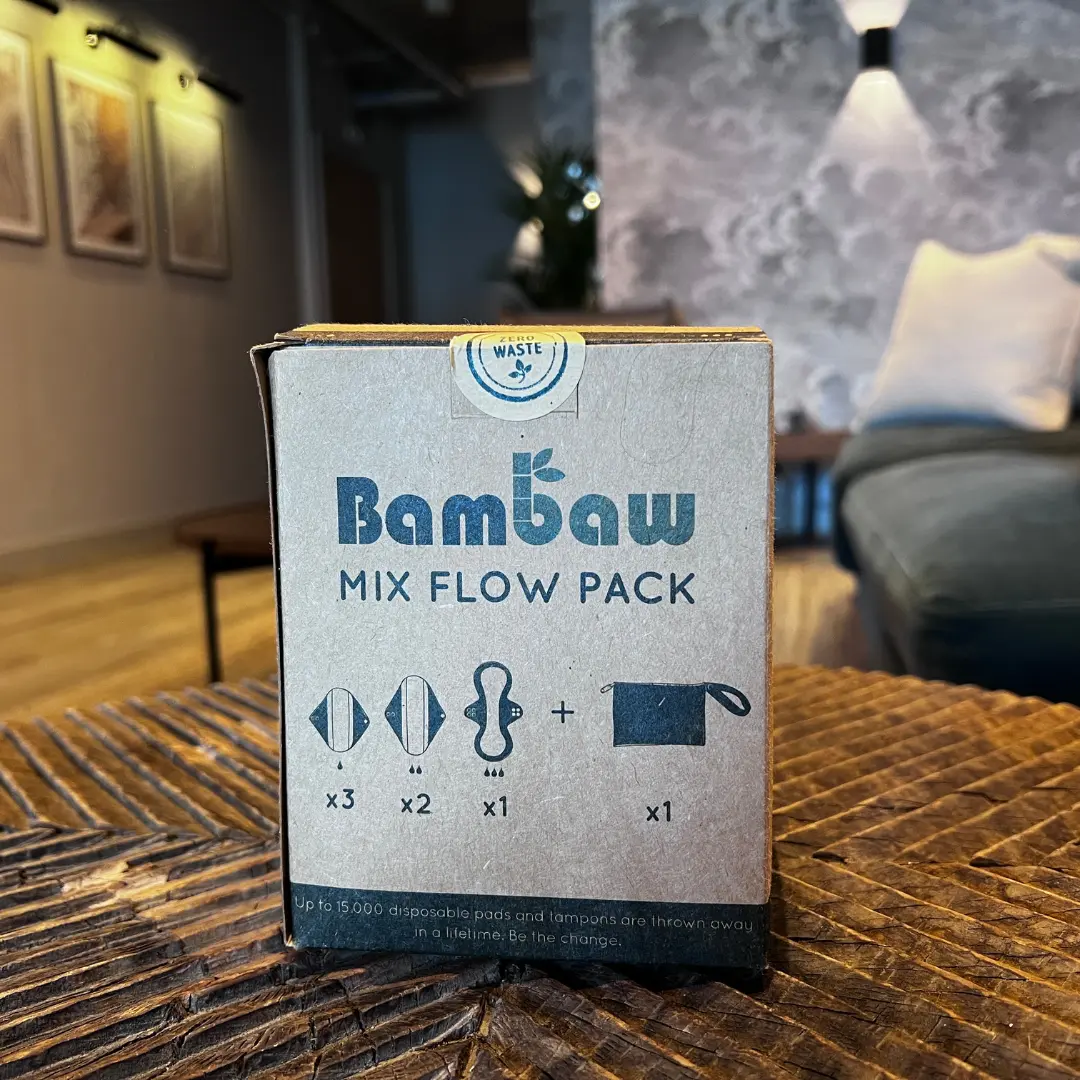
A few more details from four years of use: the full mixed-flow set, the box it arrives in, and the pad itself up close.

Bambaw Reusable Sanitary Pads FAQ

Are Bambaw reusable pads actually more absorbent than disposable pads?

In our own test, yes. The medium Bambaw pad absorbed 70ml of water compared with 45ml for a disposable pad of the same size, roughly one and a half times as much.

How do you wash reusable sanitary pads?

Rinse in cold water as soon as you can after use, then hand wash or machine wash on a cold cycle, and air dry. We avoid hot water and tumble drying, which can wear the waterproof PUL layer faster.

How long do Bambaw reusable pads actually last?

After four years of regular monthly use, ours have held up to repeated washing and stayed comfortable and absorbent, with no meaningful drop in performance.

What are Bambaw reusable pads made from?

Each pad has three layers: bamboo charcoal for odour control, microfiber for absorption, and a waterproof PUL layer to stop leaks through to clothing, all held in place with snap-on wings.

Do reusable pads leak?

The waterproof PUL backing layer is designed to stop leaks through to clothing. As with any pad, matching the size to your flow and changing it regularly makes the biggest difference to how secure it feels.

Is the storage pouch big enough for a full cycle?

The waterproof pouch has two compartments and holds up to four small or medium pads, but the heavy flow pad does not fit inside it, so you will need to carry that one separately on heavier days.

Are reusable pads better for sensitive skin than disposables?

In our experience, yes. Disposable pads can be chlorine-bleached and may carry artificial fragrances or adhesives that irritate the skin, while the soft microfiber layer on a reusable pad has caused noticeably less chafing for us.

How this work is funded

We buy every product ourselves and test it at home. No sponsored tests, no pay-to-rate schemes, no display advertising. We may earn a small commission if you buy through our links, at no extra cost to you. Read our full disclosure.

Disclosure

If you buy through this page we earn a small commission, at no extra cost to you. The recommendation comes first, the affiliate link comes after.

Where to buy Bambaw Reusable Sanitary Pads Available from Amazon US, Amazon UK, Bambaw.
Where to buy

Where to buy Bambaw Reusable Sanitary Pads

These are affiliate links. If you buy through one we may earn a small commission, at no extra cost to you. It never changes what we recommend.

No prices shown on purpose. They drift, and stale numbers help no one.

0 0 votes
Article Rating
Subscribe
Notify of
guest
0 Comments
Oldest
Newest Most Voted
0
Would love your thoughts, please comment.x
()
x