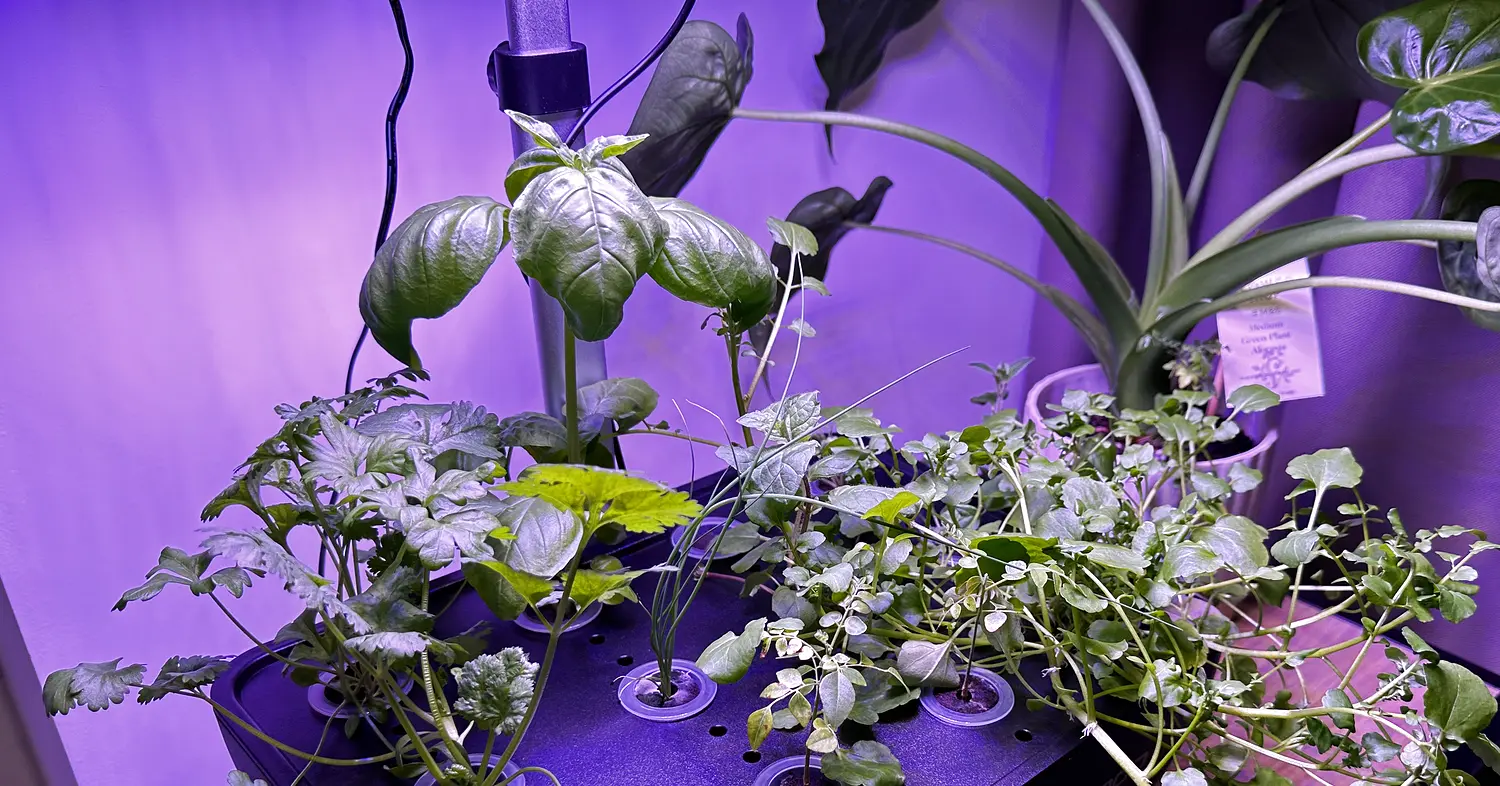
I bought the iDOO 12-pod hydroponics system in late 2022 with no previous experience of growing anything this way. Three years on, it’s still running on the kitchen counter, still producing herbs that end up in actual meals.
iDOO Indoor Hydroponics Overview
Before buying I spent several hours comparing systems in this price range. Since then I’ve used this one consistently, through different herbs, different seasons, and the gradual accumulation of things I wish the manual had mentioned. The sections below cover all of it: setup, planting, maintenance, and an honest account of what’s held up and what hasn’t after three years of use.
The iDOO 12-pod hits the right balance between price and what you get. It’s not a premium product and it doesn’t pretend to be. But it works, and it keeps working, which is more than can be said for everything in this category.



System Guide
Initial Set-Up
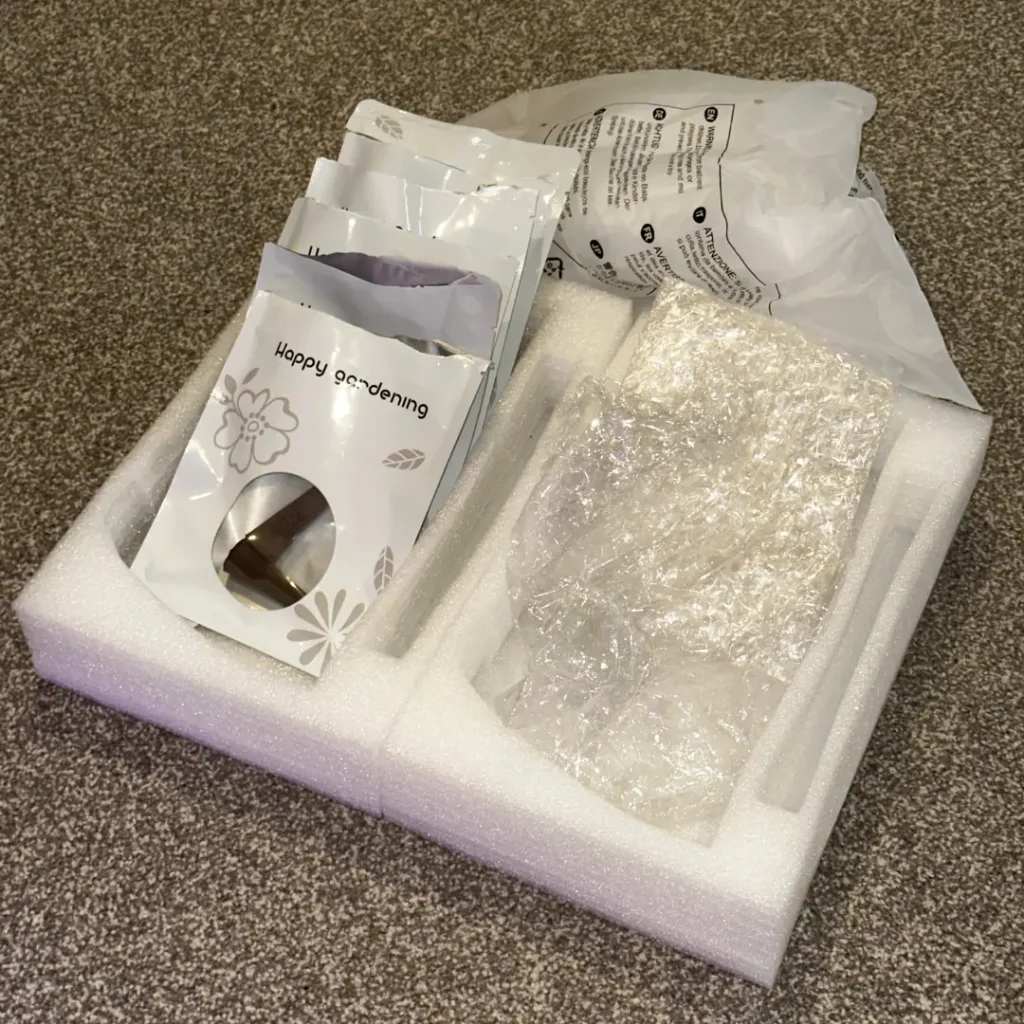
The system arrives neatly packaged with everything in its own compartment. My main concern from the start was the packaging itself, there’s more foil-laminated plastic film than the contents justify, and most of it can’t be recycled at kerbside. For a product aimed at people growing their own food sustainably, iDOO could do considerably better here.
Unboxing and Contents
- iDOO hydroponic growing system
- 12 Plant Baskets
- 12 grow domes (for germination)
- 24 Sponges
- 2 bottles of plant food (parts A and B)
- 12 plant labels
- 6 hole covers
- 12 basket covers
Basic Assembly
Top Tip: Don’t plug in until the tank has water in it. Running the pump dry will damage it. The instructions do say this, but it’s easy to miss.
Where to Place your Indoor Garden
Three things matter most for placement: power access, light spill, and noise.
Filling/Topping up the Nutrient Tank
One thing the iDOO instructions don’t mention: organic liquid nutrients don’t work in hydroponic systems. It’s a reasonable instinct, you’re growing food, organic seems like the right choice, but organic feeds contain matter that needs to break down before plants can absorb it. That’s how soil gardening works. Hydroponics needs minerals that are already dissolved. Using organic feed will cause the water to deteriorate quickly and won’t nourish the plants. Stick to proper hydroponic mineral nutrient. I’ll cover the alternatives to the supplied iDOO bottles in a separate piece.
Germinating Seeds
Seeds aren’t supplied, so you’ll need to buy these separately. I bought a selection of herbs and had all but two germinate successfully on the first attempt.
Soak seeds in water for about two hours before planting. Seeds that sink tend to germinate more reliably. That said, I’ve found small seeds like basil and dill float almost entirely and still germinate well, don’t overthink it if they don’t sink.

Submerge the growing sponge to hydrate it fully, then place two or three seeds in the seed hole. Slot the sponge and basket into the growing position and cover with the grow dome to hold humidity until the first leaves appear.

One thing worth knowing early: the basket label stickers can prevent the grow domes from sitting flush, which breaks the humidity seal and slows germination. I stopped using the stickers entirely after the first batch and germination rates stayed the same.
System Settings
High Performance Grow Lights
The LED grow lights simulate a year-round constant day/night cycle.
Using a mixture of LED lights, the iDOO hydroponics system creates two modes as shown creating an optimal environment for indoor gardening.


Vegetable mode contains more blue light and is beneficial for vegetable growth.
Flower/Fruits mode is a mixture of white light and red light. Ideally suited to flowers and fruiting plants.
You can switch between modes freely, each time the 16 hour on and 8 hours off automatic timer is reset.
You can override the automatic timer, turning the led lights off for 10 hours (sleep mode) by pressing the current mode button once.
Fan/Water Pump

The fan and pump normal mode is 30min timed intervals. This can also be suspended for 10 hours by pressing the pump switch.
Long press the fan button to turn off the fan only.
System Maintenance
Adding more nutrient solution
How often you need to add nutrients depends on what you’re growing and how fast it’s developing. In active growth phases, I check the water level every few days and add a small equal measure of A and B each time I top up with water.
iDOO recommends changing the entire tank of water up to once a week. I haven’t followed this from the start, and I don’t think you should either. A full weekly change wastes a significant amount of nutrient-rich water, and in practice the plants don’t need it. I top up as the level drops and do a full drain and clean only when the tank needs it, roughly once a month. The plants are no worse for it.
This also has a real impact on how long the supplied nutrient lasts. Following iDOO’s own guidance, the included bottles would be used in a matter of weeks. Top up rather than change, and the same supply stretches to several months.


Cleaning the Water Tank and Pump (Monthly)
I clean the tank and pump thoroughly once a month. It takes about 15 minutes once you’ve done it a couple of times.
Remove the LED panel, support arm, and plant tray, then drain the tank water into a bowl, not down the sink. The pump clogs gradually with algae and fine root fibres as plants mature, which slows water flow noticeably if left. It unscrews with one small screwdriver and cleans up easily under warm running water.
No detergent, residue will damage the plants. Warm water and a sponge is all that’s needed for the tank and pump.

Once everything is reassembled, pour the old tank water back in, leaving behind the last murky inch, which goes onto houseplants rather than down the drain. Top up with fresh water and a measured dose of A and B.
Top Tip: The pump power cable gets wet easily during cleaning. Make sure it’s completely dry before reconnecting.
Basic Trimming of Herbs
After Three Years: What’s Actually Happened
Three and a half years in, the system still works. But our use of it has changed because that’s probably useful to anyone weighing up a long-term purchase.
In the early months we used it constantly. We were working from home more, cooking almost every day, and having fresh herbs a few steps away from the kitchen made a real difference. Basil, coriander, parsley, watercress, all growing well, all going straight into meals.
The limitation we found over time is travel. We both travel regularly for work, and when we’re both away for two or three weeks at a stretch, there’s nobody to top up the water. Without fresh water coming in, the roots start to deteriorate, they go brown and the plants struggle. In a couple of cases we came back to a system that was hard to recover in the time we had before the next trip. In the last few months we haven’t been running it at all, simply because our schedule hasn’t been stable enough to maintain it properly. The system itself is fine, it’s a lifestyle fit issue, not a product failure.
If you travel frequently for more than a week at a time, it’s worth being honest with yourself about this before buying. The iDOO needs regular attention. It’s not set-and-forget.
The pump: a year in
At around the one-year mark, the pump started running inconsistently. I contacted iDOO support, explained what was happening, and they identified the part as faulty. They shipped a replacement pump directly from China, all I covered was the postage cost. The swap was straightforward, and the unit has run without issue since.
This is worth knowing for two reasons. First, it changes how I’d describe the “no spares list” negative, the list still doesn’t exist, but the support was genuinely good. Second, if your pump starts behaving oddly rather than failing outright, contact iDOO before assuming the worst. In our case it was a fixable hardware issue, not the end of the unit.
The timer reset
One frustration specific to the standard (non-WiFi) model: if the unit loses power, including when you unplug it during cleaning, the timer resets to zero. It doesn’t hold the schedule. So if you’ve had it running on a nice rhythm and then clean it or lose power briefly, you need to re-establish that rhythm manually by plugging in at the right moment or resetting the timer with the light controls.
It’s a minor irritation rather than a dealbreaker, but it’s the kind of thing you only discover after a few days sometimes. The WiFi version’s app control likely handles this better, since you can set absolute timers rather than relative ones.
What we’ve learned grows well: and what doesn’t
Watercress has been the standout performer, grows quickly, thrives in water, produces consistently. Basil, coriander, parsley, and mint have all done well also.
Our curry leaf plant was a disappointment. It grows much better in soil, the root system seems to prefer the stability, and ours never really took hold in the hydroponic setup. If curry leaves are a priority for your cooking, a pot with good compost will serve you better.
A note on nutrients: organic doesn’t work
Early on I tried a couple of organic liquid plant feeds as an alternative to the supplied hydroponic nutrient. It’s an understandable instinct, you’re growing food, organic seems better. The problem is that organic nutrients contain matter that needs to break down before plants can absorb it, which is how soil gardening works. In a hydroponic system, plant roots need minerals that are already dissolved and available. Organic feed doesn’t deliver that, and the organic matter in the water caused roots to go bad quickly.
Proper hydroponic nutrient, which is essentially a balanced mineral solution is the only practical option. I’ve now tried a few different brands beyond the supplied iDOO bottles, and I’ll write those up separately. But don’t be tempted by the organic route, it’s not a viable substitution in a water-based system.
Positives and Negatives
Positives
- Easy to set up and use, even with no prior experience. You don’t need to understand hydroponics to get results.
- Good for all ages, watching the plants develop is genuinely satisfying, and it works well as a learning tool for children.
- Compact and tidy on a kitchen counter. Looks better than you’d expect for the price.
- The pump and fan are quiet enough for most rooms. A kitchen or home office is fine; a bedroom isn’t ideal.
- Maintenance is manageable, about 15 minutes monthly once you know the routine.
- Everything you need to start is in the box, apart from seeds.
- iDOO customer support has been good in our experience. When our pump developed a fault at around the one-year mark, they replaced it for the cost of postage only.
Negatives
- Best suited to herbs and compact leafy plants. Larger plants quickly hit the 11-inch light ceiling, stick to what it’s designed for.
- The growing pods are fairly close together, so plants need regular trimming to avoid crowding each other.
- More maintenance than you might expect from an automated-looking system, particularly the monthly pump clean.
- The included nutrient supply is misleadingly presented. Following iDOO’s recommended weekly water changes, the bottles last for roughly three full tank changes, a matter of weeks. The supplied amount is a starting dose, not a season’s supply.
- Organic nutrients don’t work in hydroponic systems, and the instructions don’t emphasise this. Only purpose-made hydroponic mineral feed will do the job.
- The instructions are vague in several places. Some things you’ll only learn through trial.
- No published spares list. Parts are available and support is helpful, but you need to contact iDOO to find out what’s available rather than being able to order directly.
- The timer resets to zero if the unit loses power or is unplugged including during cleaning. The WiFi version with app control doesn’t have this limitation.
- Not ideal if you travel frequently for extended periods. Without regular water top-ups, roots can deteriorate quickly and recovery can be difficult.
- The packaging uses too much plastic and foil-laminate, most of which can’t be recycled at home. Entirely within iDOO’s control to fix.
iDOO Alternatives
Wrapping Up
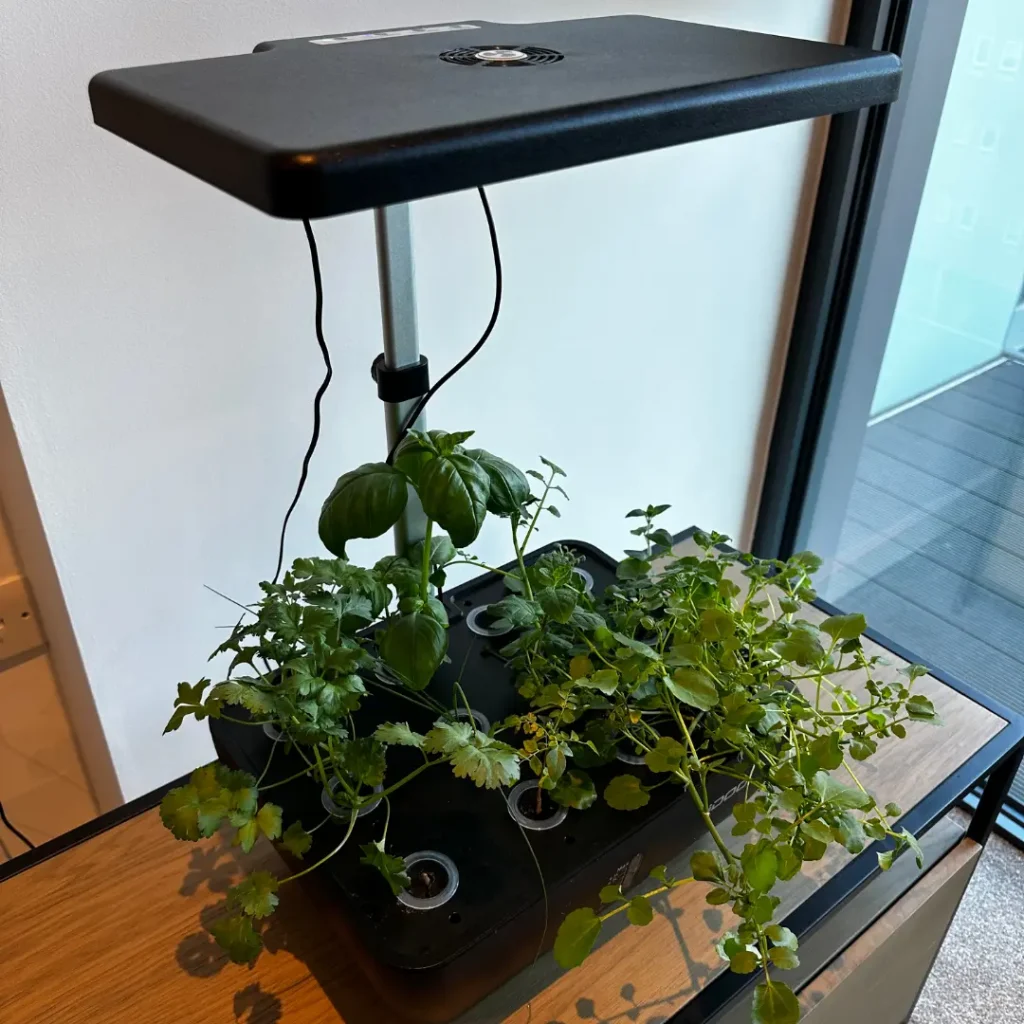
Three and a half years in, the iDOO 12-pod has done what it promised. Fresh herbs, year-round, no soil, no prior knowledge required. The pump runs, the light grows, the herbs get picked and go into the cooking.
The honest picture is more nuanced than that. We used it most when our life had the right rhythm for it, working from home, cooking daily, travelling less. When travel picked up, the system became harder to maintain properly and we stepped back from it. That’s not a criticism of the product; it’s just the reality of what this kind of setup needs from you.
The herbs that came from it go into Farah’s cooking, coriander into her vegan mango salad, basil into pasta and soups, the rest into whatever was on that week. Fresh herbs picked minutes before they hit the pan taste different to supermarket ones that have been sitting in plastic for a week. That part, the actual point of the whole thing, worked exactly as hoped. You can see everything Farah makes over at Farah’s Foods.
My main criticisms are unchanged: the nutrient guidance wastes more than it should if followed literally, the packaging has too much plastic, and the timer reset on power loss is a minor but recurring frustration. None of these are reasons to avoid it.
If you cook with fresh herbs regularly and your lifestyle is stable enough to give the system the attention it needs, the iDOO 12-pod is still where I’d start.
FAQ
Is the iDOO hard to use?
No. Setup takes less than an hour, the system runs itself day to day, and the maintenance routine is simple once you’ve done it twice. The hardest part is waiting for seeds to germinate.
Does the pump work reliably?
Mostly yes, but ours developed a fault at around the one-year mark and needed replacing. iDOO’s support team identified the issue and shipped a replacement pump from China; we only covered the postage. Since then it’s run without problems. Monthly cleaning makes a significant difference to keeping it that way, the pump is the component that most benefits from regular attention.
Is it noisy?
No. The pump alone runs at 38 dB, comparable to a quiet fridge. With the fan on, around 45 dB. Clearly audible in a silent room, but inaudible in a working kitchen.
Does the pump get clogged?
Yes, gradually. Algae and fine root fibres accumulate around the impeller over time. A monthly clean with a small screwdriver keeps it running properly. It’s one of the more hands-on parts of owning this system.
Can I get spare parts?
There’s no published parts list, but iDOO support is worth contacting directly, our experience was good. When our pump failed they replaced it for the cost of postage. Replacement sponges are widely available on Amazon. For other components, email iDOO support and explain what you need.
Is it difficult to clean?
No. Once you’ve done it twice, the monthly tank and pump clean takes about 15 minutes. The pump removal needs a small screwdriver but is otherwise simple.
How much does it cost to run?
The unit is rated at 36W. In Ireland and the UK at current electricity rates, that’s roughly a few euro or pounds per month for continuous operation. Use this electricity cost calculator for a current figure.
Is the system easy to move?
All parts come apart without tools, but moving live plants mid-growth is awkward. Plan the location before you start planting.
Do I need the WiFi version?
Probably not. The standard 6.5L model has been entirely reliable over three years without app control. The WiFi version adds convenience, scheduled changes, remote monitoring, but none of that changes what the plants get.
What can I grow in the iDOO?
Herbs and leafy greens are what it’s designed for, basil, coriander, parsley, mint, dill, watercress, lettuce. It’s not well suited to taller or heavier plants. Tomatoes and peppers can be started in it but outgrow the light height quickly.
Can I use my own nutrients?
Use a purpose-made hydroponic mineral nutrient, the supplied iDOO bottles or any reputable hydroponic brand. Don’t use organic liquid plant feed. Organic nutrients contain matter that needs to break down before plants can use it (how soil gardening works), but hydroponics needs minerals already dissolved and available. Organic feed doesn’t deliver that and causes the water to deteriorate quickly. Standard houseplant feed has the same problem, the concentration and nutrient profile isn’t suited to a water-only system.
Can this be used in a closet/cupboard?
Hi Daniel, I can’t see why not. As long as you have space and a place to plug it in. It has all its light needs from the light panel and doesn’t make much heat. Please let us know how it goes, we would be interested!
My sister has an Idoo 303 and we cannot detach the rod from the bowl. I see where there is a little hole with a round bump, but no amount of pushing or pulling seems to dislodge the rod. Any tips?
Hi Joelle, I have found it a bit hard to remove before. I normally find a wiggle while holding the tank down does the trick. Let us know how you get on.