Vegan Lotus Biscoff Bao Buns
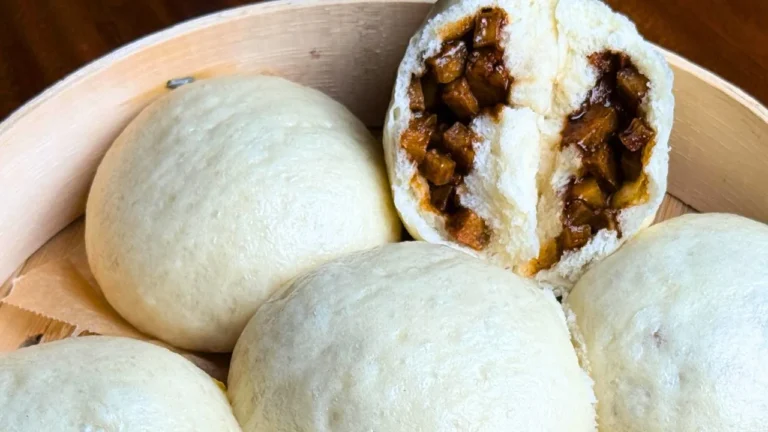
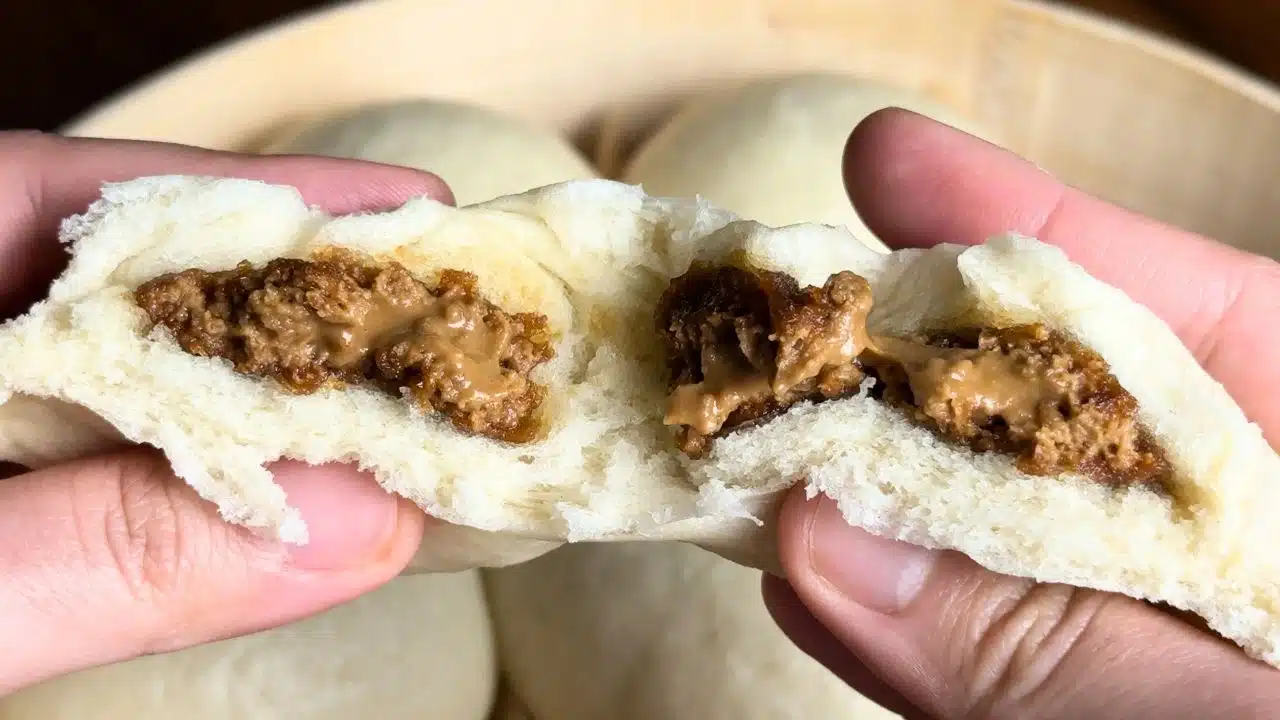
Pillowy steamed bao filled with warm, spiced Lotus Biscoff. The soft dough and caramelised cookie-butter centre make these an easy, comforting treat, best eaten while the filling is still molten.
 By Farah
· April 2026
By Farah
· April 2026
Prep 0.5 hr · Cook 0.5 hr · Rest 1 hr
Makes 6 · 215 kcal per bun
Contains Gluten (wheat), Soya Allergen detail ↓
Learn how to make Lotus Biscoff steamed buns with a soft and fluffy dough and a rich, caramel-like filling. The Biscoff spread softens as the buns steam, creating a smooth and slightly gooey centre.
This small batch recipe is simple to follow and perfect for a quick homemade treat. The light steamed dough pairs really well with the sweet and spiced flavour of Biscoff, making these buns especially good served warm.
Enjoy them warm for the best texture and flavour.
This recipe makes 6 buns.
Let’s cook
Worth a minute
- Yeast is fresh and active - check the expiry date.
- Cut parchment paper squares for each bun.
Ingredients
Filling
- 6 tbsp Lotus Biscoff spread
Dough
- 180 g all purpose flourI use 9% protein content
- 1.5 tbsp sugar
- 1/2 tsp instant yeast
- 1/2 tsp baking powder
- 90 ml lukewarm water
- 1.5 tsp neutral oil

Lotus Biscoff filling
Prepare the Lotus Biscoff filling
Scoop 1 tablespoon of Lotus Biscoff spread for each bun and place onto a tray or parchment paper.
Chill in the fridge for about 20 minutes until slightly firm. This makes it easier to wrap and helps prevent leaking during shaping.
Making the dough
Mix the dry ingredients
Add the all purpose flour, sugar, instant yeast, and baking powder to a large bowl. Stir well so everything is evenly combined.
Add the liquids
Pour in the lukewarm water and neutral oil. Mix with a spoon or your hands until a rough dough forms.
Knead until smooth
Turn the dough out onto a clean surface and knead for 8 to 10 minutes until smooth, soft, and elastic. The dough should feel supple and no longer sticky.
First proof
Place the dough back into the bowl and cover with a damp kitchen towel. Leave to proof at room temperature for about 1 hour, or until doubled in size.


Remove excess air and divide
Once doubled, gently punch down the dough to remove excess air. Divide into 6 equal portions and roll each into a smooth ball.
Shaping and steaming the buns
Fill and shape the bao
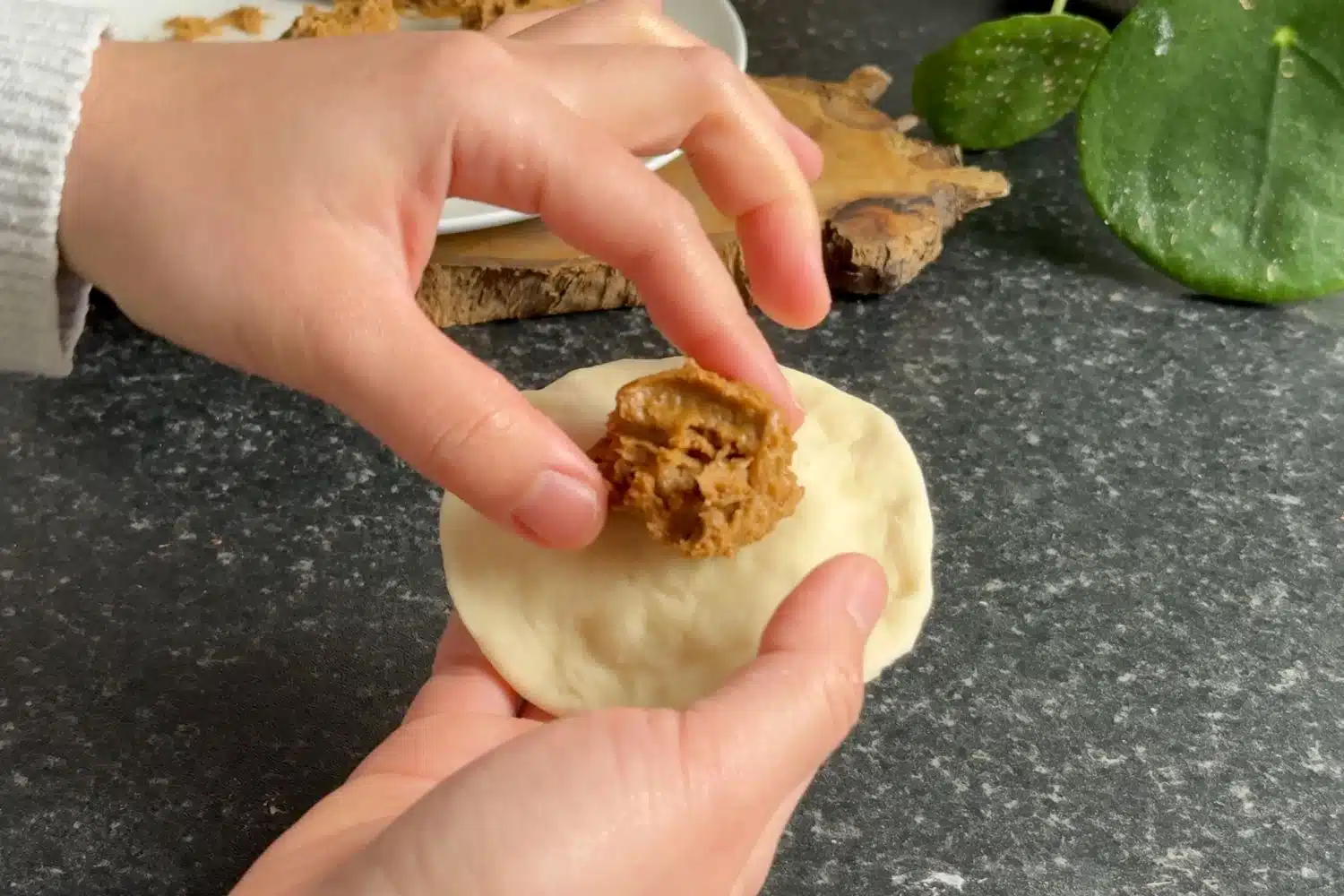
Flatten one dough ball into a disc, keeping the centre slightly thicker than the edges.
Place the Lotus Biscoff filling in the centre. Gather the edges up and around the filling, pinch to seal, and gently roll to form a smooth bun with the seam underneath.

Line the buns
Place each bun on a small square of parchment paper. This prevents sticking and makes lifting easier.

Second proof
Arrange the buns in the steamer with space between them. Cover and let proof for 20 to 30 minutes until slightly puffy.
Steam
Steam over boiling water for 8 minutes. Once done, turn off the heat and leave the lid on for 2 minutes before opening. This helps prevent the buns from collapsing.
Serve
Enjoy your hot, soft, and fluffy Lotus Biscoff steamed buns while they are fresh from the steamer.


Wrap the lid with a kitchen cloth and secure to the handle to catch condensation drips and keep your buns dry.
No talking. Just the making.

2:44 · Farah's Foods on YouTube
Get to know it
The full picture
Always check your own packets; shared processing varies by brand.
Nutrition
An estimate per bun, from the ingredients listed.
Percent daily values based on a 2,000 calorie diet. Values vary with the brands you use.
Notes
- Chilling the filling helps a lot Slightly firm Biscoff is easier to handle and keeps its shape when wrapping.
- Do not skip sealing properly Biscoff softens quickly when warm, so seal the buns tightly to prevent leaks.
- Keep dough soft and smooth A soft dough gives better texture after steaming. Avoid adding too much flour.
- Second proof until slightly puffy The buns should feel light before steaming for a fluffy result.
- Do not overproof Overproofing can cause wrinkled or collapsed buns.
- Steam on medium heat High heat can cause uneven surfaces.
- Rest after steaming Leave buns in the steamer for 2 minutes before opening the lid to prevent shrinkage.
- Best eaten warm The Biscoff centre is soft and slightly gooey when freshly steamed.
Lotus Biscoff steamed buns are a modern twist on traditional bao, combining soft steamed dough with a rich, caramelised biscuit spread. The familiar spiced flavour of Biscoff works surprisingly well as a filling, melting slightly as the buns steam to create a smooth and creamy centre.
The dough follows a classic bao method, using yeast to create a light and fluffy texture. Steaming keeps the buns soft and moist, allowing the filling to stay smooth without becoming too runny.
Chilling the Biscoff before wrapping makes the process much easier and helps keep the filling contained during steaming. Once cooked, the contrast between the airy bun and the sweet, slightly spiced centre makes these especially satisfying.
These buns are best enjoyed warm, when the filling is soft and fragrant. They work well as a snack, dessert, or something a bit different to serve with tea or coffee.
| Problem | Likely cause | Fix |
|---|---|---|
| Bao wrinkled after steaming | Lid lifted immediately after steaming | After steaming, turn the heat off and let it sit for another 2 minutes before opening the lid. |
The quiet science
Bamboo steamer is ideal as its natural material absorbs condensation rather than dripping it on the buns.
Leftovers, used well
Keep leftover buns in an airtight container at room temperature for up to 1 day, refrigerate for up to 3 days. Avoid leaving them uncovered as they dry out quickly.
You can also freeze them in a zip-lock bag for up to 1 month.
To reheat, steam or microwave from frozen.
Questions
Why did my buns wrinkle after steaming?
This usually happens when the lid is opened immediately. Leaving the buns to rest with the lid on allows the temperature to stabilise.
What flour works best?
Plain flour works well. A medium protein flour gives soft buns without becoming chewy.
Can I steam without a bamboo steamer?
Yes. Any steamer setup works as long as the buns are not sitting in water and there is good steam circulation.
Do I need to chill the Biscoff before using?
Yes, chilling helps it firm up slightly, making it easier to shape and wrap.
Can I freeze steamed buns? How do I reheat frozen buns?
Yes. Let the buns cool completely after steaming, then place them in an airtight container or freezer bag. Freeze for up to 2 months.
Steam directly from frozen for 8 to 10 minutes until fully heated through. Avoid thawing first, as this can affect the texture.
If microwaving, cover the bun with a damp paper towel and heat in short intervals to prevent drying out.
Doubling the batch
- This recipe doubles or triples easily. Dough and filling scale proportionally.
- Divide and shape all buns before the second proof. Keep unsteamed buns covered with a damp cloth while waiting for their turn.
- Do not freeze uncooked shaped buns as the dough degrades.
From our kitchen