Homemade Tempeh
Make your own fresh tempeh from scratch with nothing but soybeans and starter. A rewarding multi-day ferment that gives you firm, nutty, protein-rich tempeh far better than shop-bought.
 By Farah
· March 2025
By Farah
· March 2025
Makes 10 · 195 kcal per 100 g
Contains Soya Allergen detail ↓
This recipe yields about 1kg of fresh tempeh, perfect for slicing, pan-frying, adding to curries, or stir-fries. With just a few ingredients and a bit of patience, you’ll get a block of nutty, protein-rich, fermented tempeh that’s fresher (and tastier) than store-bought!
Let’s cook
Ingredients
- 500 g dried soybeans
- 2.5 tbsp vinegar
- 1 tsp tempeh starterRhizopus spores

Soak soybeans
Rinse dried soybeans thoroughly. Place them in a large bowl and cover with plenty of water. Soak for 12-18 hours until they double in size. You can refrigerate the beans if soaking for more than 18 hours to prevent spoilage.
Dehull soybeans (optional but recommended)
After soaking, rub beans between your hands to loosen the skins. Add water, let the skin float and pour them off. Repeat a few times to remove most of the hulls. This step is optional, and I usually do it if I have extra time. Removing the hulls helps the tempeh bind more tightly and improve fermentation.

Cook soybeans
Place the dehulled beans in a large pot and cover with water. Bring to a boil, then reduce heat and simmer for 30-40 minutes until tender but not mushy. Drain the beans.
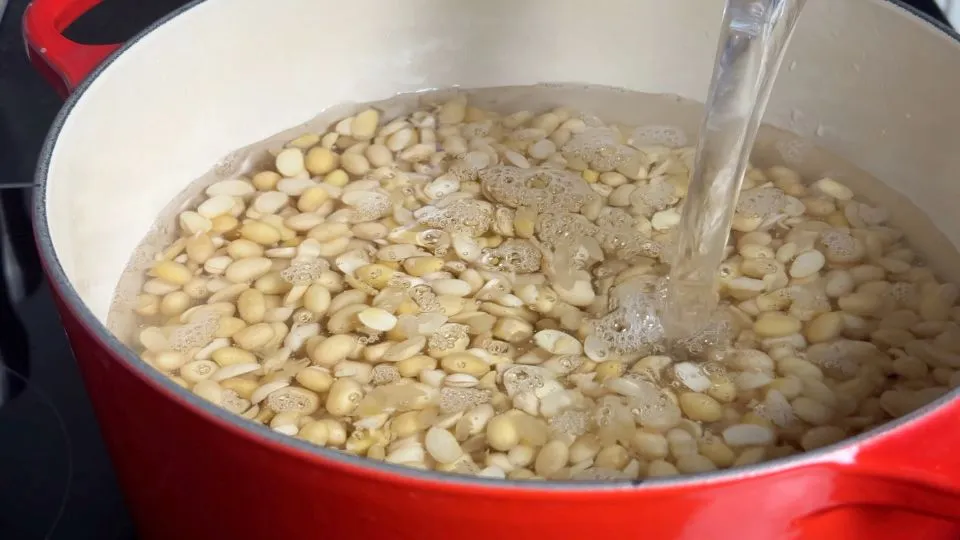

Dry and cool beans
Spread cooked beans out on a clean kitchen towel. Let them air dry and cool down for 15-30 minutes. This is important as excess moisture can lead to unwanted bacterial growth during fermentation.

Add vinegar
Transfer beans to a large bowl. Add vinegar and mix well. Vinegar plays an important role as it lowers the pH, improves fermentation and reduce the risk of spoilage.

Add tempeh starter
Add tempeh starter and mix thoroughly.

Pack the beans for fermentation
Fill ziplock bags with the bean mixture. Flatten beans into a 1.5-2cm thick layer for even fermentation. Poke small holes throughout to allow air to circulate. Traditional method uses banana leaves.

Ferment tempeh
Place the bag in a warm environment around 30deg C. Fermentation takes about 36-48 hours. It's done when beans are firmly bound together with a thick, white mycelium and have a pleasant, nutty smell. Avoid disturbing tempeh during fermentation. Check after 24 hours to monitor progress.

Store or cook
Once fully fermented, store in the fridge for up to 7 days or freeze up to 3 months. Slice and cook as desired.
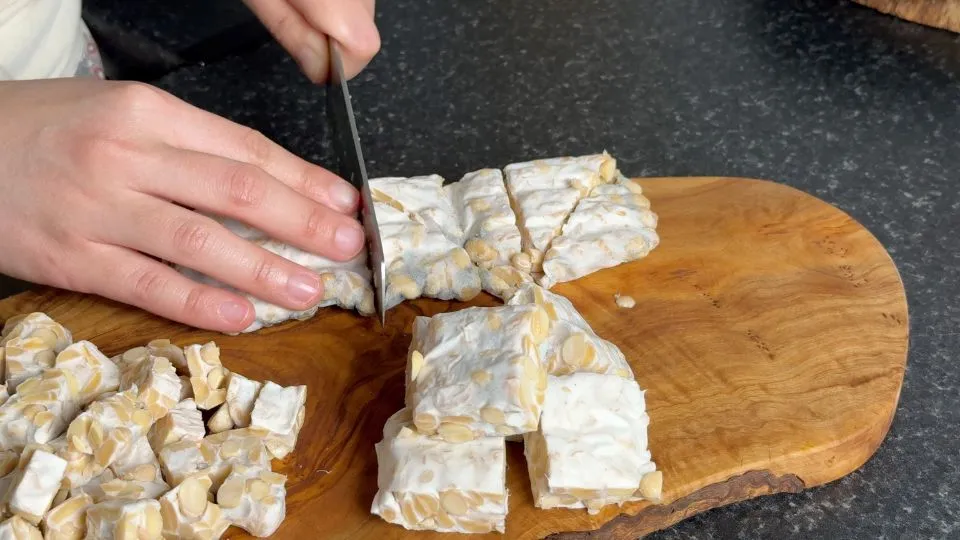

No talking. Just the making.

2:38 · Farah's Foods on YouTube
Get to know it
The full picture
Always check your own packets; shared processing varies by brand.
Nutrition
An estimate per 100 g, from the ingredients listed.
Percent daily values based on a 2,000 calorie diet. Values vary with the brands you use.
Notes
Making tempeh at home is a rewarding process that gives you full control over the ingredients, flavor, and freshness. With just soybeans, a starter, and a bit of patience, you’ll have a nutrient-dense, protein-packed block of tempeh ready to use in countless dishes.
Whether you pan-fry it, grill it, or toss it into your favorite stir-fry, homemade tempeh adds depth, texture, and natural umami to your meals.
If you tried this recipe, we’d love to hear how it turned out! Tag us on Instagram, TikTok, or YouTube (@FarahsFoods) and share your creations. Don’t forget to subscribe for more plant-based cooking and fermentation tips.
Questions
Do I have to remove the soybean skins?
No, it’s optional. However, removing most of the skins helps the tempeh bind together better and promotes more even fermentation. If you’re short on time, you can leave some skins on, the tempeh will still ferment, just with a looser texture.
What’s the purpose of adding vinegar?
Vinegar helps lower the pH of the soybeans, creating an environment where the Rhizopus mold (tempeh starter) thrives and harmful bacteria are discouraged. It makes the fermentation process more reliable and safe.
How long should I ferment tempeh?
Tempeh typically ferments for 36 to 48 hours at a warm, stable temperature (30–33°C / 86–91°F). It’s ready when the beans are fully bound by a firm, white mycelium and have a mild, nutty smell.
Is black mold on tempeh safe?
Yes, some black or dark grey spots are normal near the end of fermentation. It’s just the mold starting to spore. As long as the tempeh smells earthy or nutty and there’s no green, pink, or slimy texture, it’s safe to eat.
Can I freeze tempeh?
Absolutely. Tempeh freezes well and can be stored for up to 3 months. Slice it or leave it whole, just wrap it tightly and use as needed.
My tempeh didn’t bind. What went wrong?
This usually happens if:
- The beans were too wet
- The fermentation temperature was too low or too high
- The tempeh starter wasn’t fresh or evenly mixed
- Airflow was insufficient (not enough holes in the bag)
Make sure beans are dry to the touch, the starter is fresh, and the environment is warm with good ventilation.
From our kitchen